
Visa has open-sourced the Visa Vulnerability Agentic Harness (VVAH), providing a framework for using frontier AI models to identify and remediate complex vulnerabilities in critical infrastructure. This move marks a shift for security leaders from simply counting bugs to measuring the Mean Time to Adapt—the speed at which a team can prove a fix actually closes an attack path.
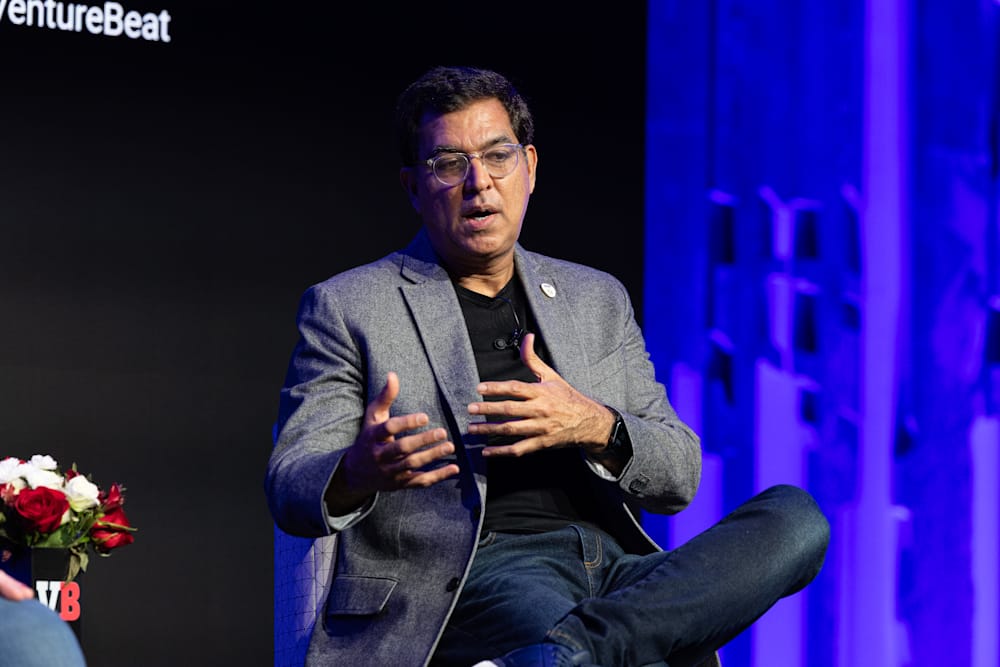
The transition to agentic defense. In a world of AI-driven threats, traditional scanners often fall short because they cannot reason through multi-step exploit chains. Rajat Taneja, Visa’s president of technology, notes that "In a world of agentic attacks, defense also has to be agentic." Rather than just finding patterns, the VVAH acts as a governed pipeline that directs models through structured security tasks while enforcing human oversight and deterministic policy gates.
A four-phase security pipeline. The harness operates across eleven stages to ensure findings are actionable rather than just noise. It moves beyond basic scanning by requiring the following steps:
- Discovery & Modeling: Focusing on the attack surface before starting the scan.
- Deep Dive & Verification: Using multi-agent voting to confirm if a vulnerability is truly exploitable.
- Synthesis & Reporting: Compressing the lifecycle into structured triage artifacts.
- Remediation & Validation: Applying candidate patches and verifying they work in production.
New metrics for your roadmap. Visa argues that legacy measures like raw CVE closure counts can be misleading if the underlying exploit chains remain open. To solve this, the company recommends tracking three specific dimensions:
- Inventory freshness: How current your view of code and configurations actually is.
- Exploitable paths per release: The number of end-to-end attack chains remaining possible after a deployment.
- Validation cycle time: The time required to produce evidence-backed proof that a fix stays working.
Technical requirements for full use. While the harness is vendor-neutral and works with Anthropic Claude and OpenAI-compatible models, some features have specific requirements. Currently, the remediation and validation stages require Anthropic models to access the necessary file-editing tools. Security teams can find the source code on GitHub to begin inspecting or extending the implementation for their own environments.
What this means for your strategy. This release provides a blueprint for shifting your security posture toward continuous validation. You should consider adopting the Mean Time to Adapt metric to move your team's focus toward verifiable outcomes rather than just clearing a backlog of alerts. Read more: Microsoft unveils Project Perception. Here is how it secures your data against AI-speed attacks.