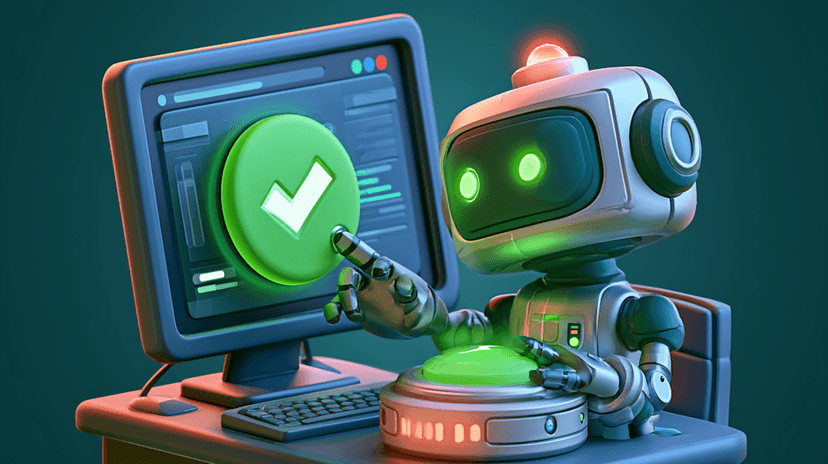
Prentis is reportedly seeking to raise $100 million at a $1 billion valuation. Co-founded by Ritankar Das, Reid Hoffman, and Mark Pincus, the startup is developing computer-use models that can read what is on a screen and operate software to complete office tasks. (source)
The aim is to take routine work off your plate. Instead of moving information between systems or searching for missing paperwork, Prentis is training models to handle entire workflows. Two people familiar with the discussions told TechCrunch that the startup has signed contracts worth up to $50 million with several customers, including a healthcare management service organization, a manufacturer, and goods and clothing manufacturers. The reported use cases include insurance claim processing and customs duty refund exceptions.
The company is betting that smaller models can make automation more affordable. Prentis says its Hive-32B model costs about 10 times less per task than frontier application programming interfaces, or APIs. The comparison has not been independently verified, and its meaning depends on factors such as the task, hardware, response time, and prices used. If the claim holds up in real workplace settings, lower operating costs could make it practical to automate a wider range of repetitive tasks.
Prentis also claims an early lead on computer-use tests. According to the company’s pitch deck, Hive-32B outperformed OpenAI’s GPT-5.4 and Anthropic’s Claude Opus 4.6 on WindowsAgentArena and ScreenSpot-v2. WindowsAgentArena measures whether an AI agent can complete tasks in real Windows applications. ScreenSpot-v2 tests whether it can identify the right button, field, or other control on a screen. TechCrunch has not independently verified the results.
The market is moving beyond chat and toward delegated workflows. Anthropic, OpenAI, and Mira Murati’s Thinking Machines Lab are also developing computer-use or other agentic capabilities, according to the source report. TechCrunch also reported that Anthropic acquired the Seattle computer-use startup Vercept earlier this year, though the transaction details were not independently verified in the available reporting.
Why this matters for your work. The next meaningful shift in AI may not be another chatbot feature. It may be software that moves through the tools you already use, checks information across systems, and completes administrative steps that currently require constant attention. That could free people to spend more time on judgment, communication, and higher-value work instead of hunting for documents or retyping data.
Watch the evidence, not just the pitch. If your job includes repetitive tasks across multiple systems, note which steps are rules-based and which require human judgment. Those workflows are the clearest places to evaluate computer-use agents as they move from demonstrations into production. Read more: Smart crop mobility is scaling up. Here is when you should consider the shift.