
I stood on the sidewalk of a new East London development, watching the water ripple against the glass of a six-story building. This is not a traditional warehouse for 72-hour sprints or a tense studio for high-pressure pitches. It is the Lift House, a co-living and co-working space designed to show that building a world-class company does not have to become a burnout marathon.
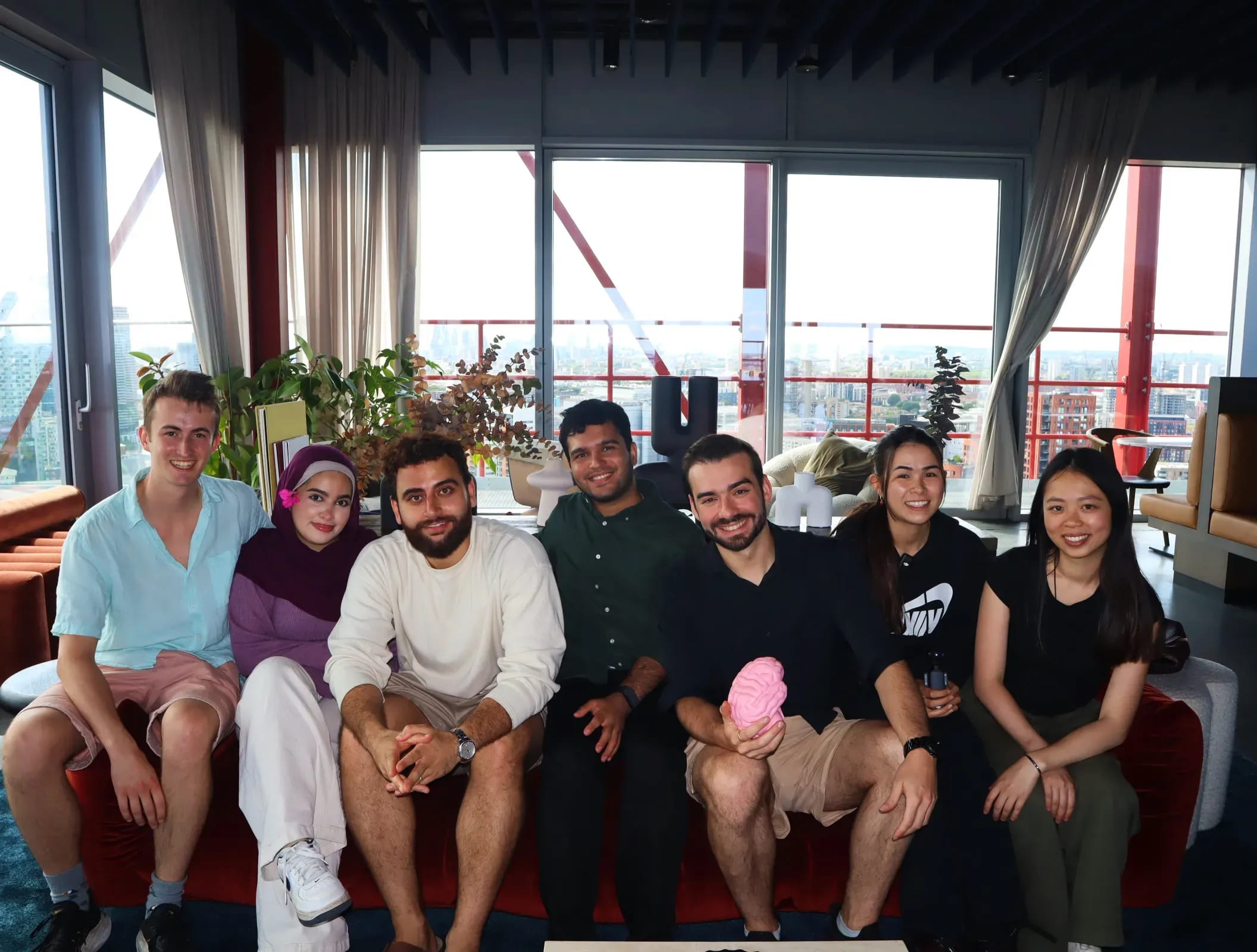
The house, formally known as the London Island Founder House, launched in March 2026. It is home to six twenty-somethings who are testing a different version of the hacker house, a shared home and workspace for founders. Their aim is not to eliminate ambition. It is to make ambition sustainable.
Rowan Aldean, the house’s founder and an applied AI entrepreneur, describes the goal as a “holistic improvement in life.” The approach has been associated with Londonmaxxing, a phrase for making the most of London’s technology scene while preserving room for health, hobbies, and life beyond work.
Why a slower pace can support bigger ambitions
Silicon Valley’s founder houses are often associated with intense work schedules, constant networking, and a single-minded focus on the next product milestone. Lift House takes a different approach. Its residents still work on ambitious companies, but they also cook together, play sports, attend cultural events, and make time to reflect on how they are living.
That distinction matters beyond this one house. A startup can demand attention at almost any hour, so the environment around a founder can either reinforce that pressure or create useful limits. The Lift House residents are betting that regular sleep, movement, food, and relationships can help them stay focused for longer.
The idea is not a promise that wellness guarantees business success. It is a practical reminder that sustained attention depends on the condition of the person doing the work. For readers pursuing demanding goals, that makes the house’s routines worth examining even if they never live in a founder house.
1. Sunday reflection turns well-being into a shared habit
On Sundays, the residents journal together. David Amor, who runs a brain coaching and training company, introduced the practice. The group reflects on three areas: time spent in nature, nutrition, and physical movement.
Writing these details down gives the week a reset point. It also makes invisible habits easier to notice. Someone who feels constantly busy may discover that the problem is not a lack of effort, but too little recovery, movement, or time outdoors.
You can borrow the same idea without creating a formal program. Once a week, record where your time went, how you fueled yourself, and whether you moved your body. Treat the notes as information, not a scorecard.
2. Morning focus protects attention before it gets fragmented
Amor begins his workday with a clear objective for the first half of the morning. The point is to decide what matters before messages and notifications decide for him.
Other residents follow different schedules. Luke starts around 8:30 a.m., while Aldean rarely wakes before 10 a.m. unless an important call requires it. The useful lesson is not one ideal wake-up time. It is the value of choosing a work rhythm deliberately instead of treating constant availability as a virtue.
Try setting one priority before opening your inbox. A protected block of focused work can be more realistic and more useful than promising yourself an entire day without distractions.
3. Shared activities make balance easier to maintain
Tuesday evenings are for volleyball, where the founders play on a local league team. On other evenings, residents may play Catan, visit art exhibitions, or listen to Wan Ying L play the piano. Presence Plumb hosts rooftop dinners with dishes that reflect the house’s Iraqi, Spanish, and other cultural backgrounds.
These activities do more than fill spare time. They create a social structure that does not depend on pitching, hiring, or raising money. That can make it easier to step away from work because the alternative is already planned.
Luke says living at the house has helped him eat better, exercise more, and sleep more. His experience is personal, not proof that the model will work for everyone. Still, it suggests a useful experiment: put one recurring, non-work activity on your calendar and protect it as seriously as a business meeting.
What London offers, and what it cannot solve alone
For founders, London combines access to universities in Oxford and Cambridge, a time zone that connects conveniently with Europe, the Middle East, Asia, and parts of North America, and government programs intended to encourage early investment. The U.K.’s SEIS and EIS schemes offer tax incentives to eligible investors who back qualifying early-stage companies.
The United States remains an important destination for many U.K. startups because it offers the world’s largest economy and investors willing to write large checks across multiple stages. Luke and his co-founder Varun have already begun expanding into the U.S. and have not ruled out moving there to be closer to customers.
That tension is part of the Lift House story. London can offer a rich professional and personal life, but founders may still need to build relationships and raise capital across the Atlantic. A healthier routine does not remove those pressures. It can give people more capacity to handle them.
A sustainable ambition is still ambition
The Lift House lease has about a year left, and its residents want to continue the experiment for as long as possible. Prospective residents are expected to show an interest in fitness and a hobby outside their companies, which reinforces the house’s central idea: a founder is more than the business they are building.
You do not need a shared house, a startup, or a Sunday group to apply the lesson. Choose one habit that protects your attention or your health, then make it recurring. A weekly reflection, a morning focus block, or a standing activity with other people can create a small boundary between building a meaningful career and being consumed by it.