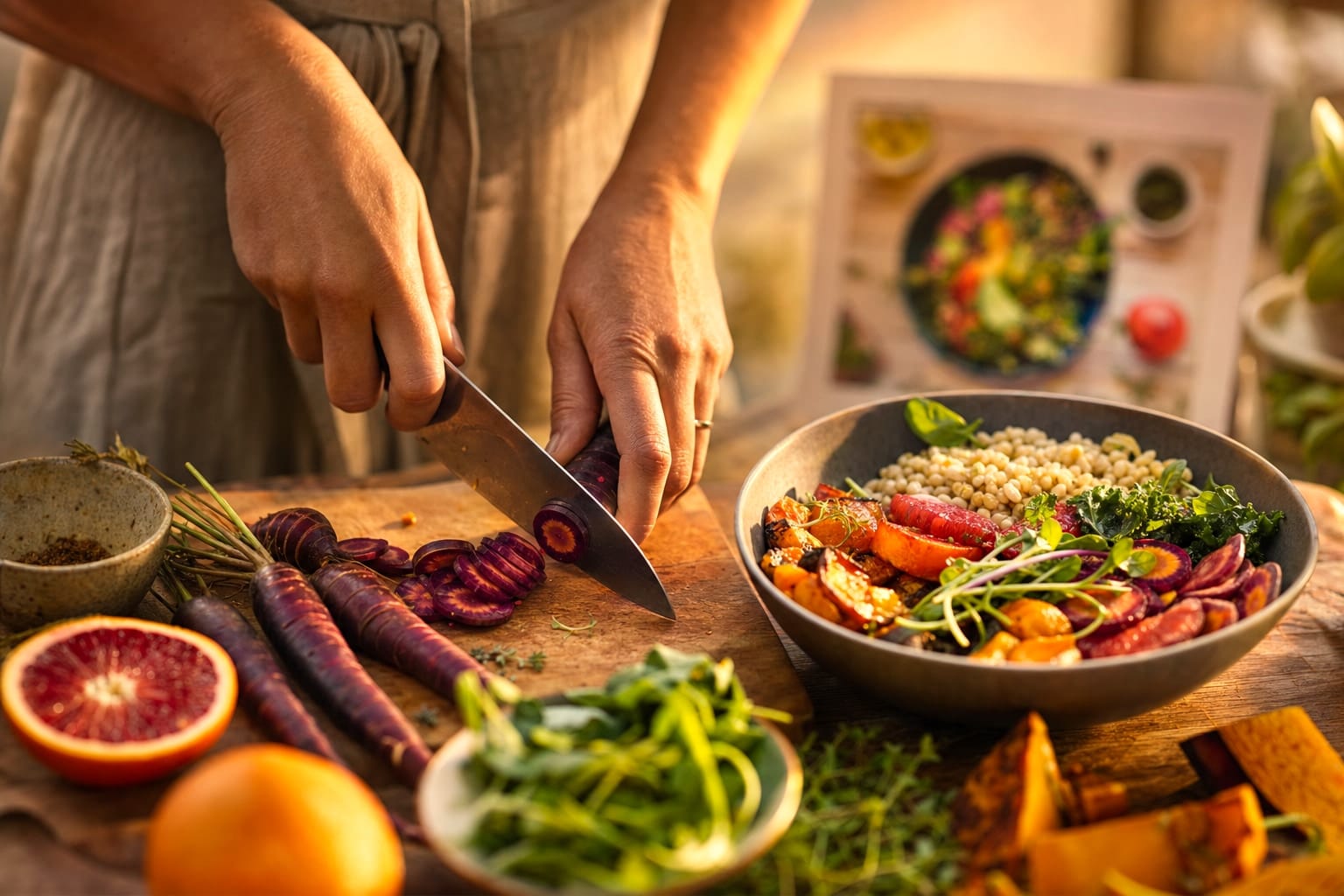

Purple Carrot is worth it if cooking is part of the point
If you are trying to eat more plants but feel stuck between bland salads and overwhelming recipes, Purple Carrot offers a more rewarding middle ground. This all-vegan meal kit service emphasizes fresh produce, layered flavors, and real cooking instead of relying heavily on soy or cashew substitutes.
That quality comes with a tradeoff. Recipes usually take 20 minutes to an hour, and some require multitasking or equipment such as a food processor. After testing five meals and several market add-ons, I gave Purple Carrot 8 out of 10. It is a strong choice for curious home cooks who want high-protein, plant-based meals without having to plan every recipe themselves. It is less compelling if you want dinner assembled in five minutes.
1. The food rewards cooks who have time to pay attention
Purple Carrot's strongest feature is the cooking itself. The recipes use fresh vegetables, herbs, fruit, and global flavors to create meals that feel more like restaurant cooking than routine meal prep. In one July test, pecan-topped, five-spice butternut squash dumplings were among the most ambitious meals I made that month. The prep was extensive, but the result was healthful and close to bistro fare.
Other recipes are easier. Rajas avocado tacos with fresh corn took about 20 minutes in my kitchen. A peanut-studded chili tofu dish balanced savory, sweet, spicy, and crunchy textures, and it was easy to imagine adapting the recipe later.
The ingredients also made a difference. The poblanos were crisp, the herbs were fragrant, and the avocado arrived ripe without being bruised. A 2026 AARP review likewise reported generally positive impressions of Purple Carrot's produce freshness and ingredient condition.
2. The real cost is both money and kitchen effort
Purple Carrot meals cost $13 to $15 per serving, plus $12 shipping per box. Shipping is free for orders above $120. The lowest-cost full-price order is $65, so the service is not designed for ordering just one dinner.
The classic meal kit serves two or four people and offers three or four meals per week. The ready-to-eat plan offers one to 10 meals per week. You can also mix and match prepared meals with recipes that require cooking. Introductory plans take half off the first week's order, up to $100.
The classic menu includes more than 24 meal kit options per week, while the ready-to-eat menu adds 20 to 30 options, along with snacks and market items. You can skip a week, but the weekly minimum still matters when you calculate the total cost.
3. The recipes are sophisticated, but the instructions assume confidence
Purple Carrot's recipe cards are attractive, well organized, and easy to save. Ingredients arrive in individual bags, and the only basic staples you generally need to provide are salt, pepper, and cooking oil.
The instructions are clear, but they are concise. Preparation details sometimes appear in the ingredient list rather than in the numbered steps. A phrase such as “parsley, leaves and tender stems minced, divided” requires you to understand what to prepare before cooking begins.
Advertised cooking times were mostly honest in my testing. Still, I often read ahead and handled several tasks at once. A less experienced cook may need more time. The butternut squash dumplings also required a food processor, which is not standard equipment in every kitchen.
The practical lesson is simple: read the recipe all the way through before turning on the stove. That small habit makes Purple Carrot's more involved meals feel manageable and helps prevent a scramble halfway through cooking.
4. Dietary details are useful, but gluten-free diners need caution
Every Purple Carrot meal is vegan. Individual meals are marked as high-protein, high-fiber, low-calorie, or low-sodium, and allergens are clearly identified on each recipe. Typical servings range from 550 to 750 calories, which may satisfy a moderate appetite but feel light to anyone used to large restaurant portions.
More than a third of the meals are gluten-free. They are not certified gluten-free for people with celiac disease, however, and they are prepared in a shared facility with wheat-containing products. That distinction matters if avoiding cross-contact is medically necessary.
The ready-to-eat meals can provide more than 40 grams of protein each, which is useful for anyone seeking convenient plant-based protein. My experience with the prepared meals was more mixed. A Korean-fried “chicken” meal with rice and a spaghetti with soy meatballs were convenient, but microwaving did not improve their texture. The meal kits were the more satisfying choice.
When Purple Carrot becomes a good decision
Purple Carrot makes the most sense if you want to cook more plant-based food, value fresh produce, and enjoy learning techniques such as building sauces, balancing textures, or preparing vegetables in new ways. It removes much of the planning and shopping while still giving you the satisfaction of making a real meal.
Choose another service if your priority is the lowest possible price, minimal preparation, or a reliably microwave-ready dinner. Purple Carrot's recipes ask more of you than a no-frills meal kit, but they also give more back.
If you are unsure, start with one week of meal kits rather than relying on the prepared meals. Set aside an evening when you can read the recipe first and cook without rushing. For the right home cook, that extra time can turn a plant-based dinner from a compromise into the part of the day you were looking forward to.