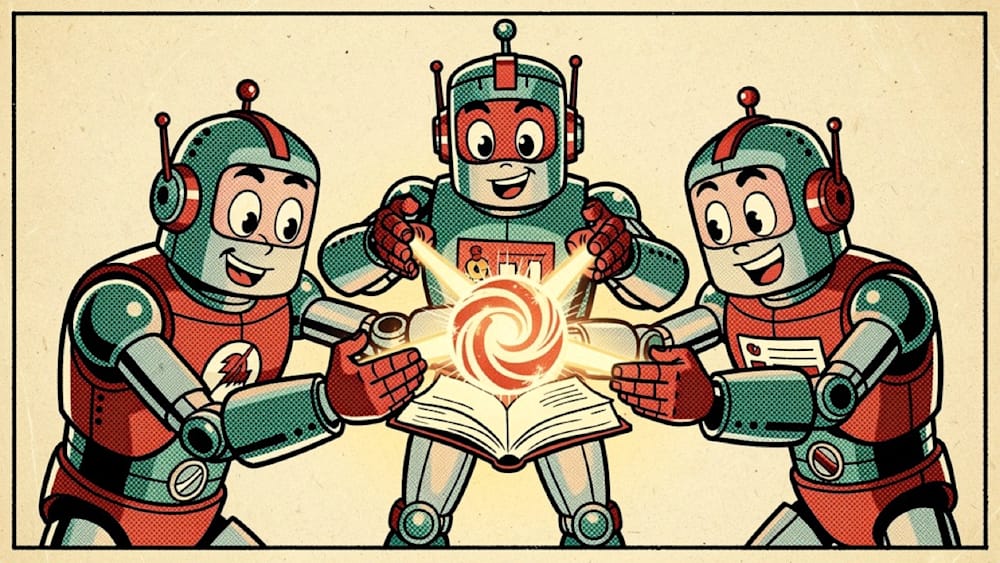

Tencent recently released Team Memory, an open-source project designed to let a group of AI agents share a centralized hub of knowledge. While individual agents often struggle to remember details across long sessions, this system allows an entire team of bots to draw from the same pool of information. For anyone managing corporate AI workflows, this marks a shift from personal assistants to collaborative workforces, but it also introduces a new risk: a single mistake in the shared pool can now impact everyone simultaneously.
How shared memory works for teams
Instead of copying a massive block of instructions into every single agent's prompt, Team Memory registers four specific types of reusable assets. Each agent is then equipped with only the data it needs for its specific task, a process Tencent calls an "Agent Loadout." These assets include:
- Chat Memory: Stores user preferences, facts, and interaction history to ensure an agent doesn't need to be reintroduced to a returning user.
- Skill: Captures specific procedures from finished work that are reviewed and versioned before being shared.
- LLM-Wiki: Converts dense documents and specifications into structured, linked pages for easy navigation.
- Code-Graph: Indexes a codebase's symbols and call relationships so an agent can predict what changes might break.
The trade-off of collective intelligence
The primary benefit is efficiency. Agents stop relearning what the team already knows, allowing them to move faster on complex projects. Tencent's own benchmarks showed that adding a persona layer—a stable picture of who a user is—improved accuracy from 48% to 76%, a 59% relative improvement. However, moving from individual to shared memory changes the "write path" of information.
When an agent's memory is private, a wrong fact only bothers one person. In a shared system, a wrong fact propagates to every teammate's agent. This creates a significant governance challenge. If two agents have contradicting facts about the same module, the system currently lacks a definitive process for deciding whose memory wins or how to expire stale data. For now, the system relies on four visibility tiers to manage access:
- Private: Readable only by the owner.
- Team: Accessible to everyone in the group.
- Restricted: Gated by specific user roles or permissions.
- Agent: Locked to one specific agent.
What you should watch for
As enterprises move toward multi-agent workflows, the focus is shifting from "how much can an agent remember" to "how do we govern what the team knows." Because only 25% of enterprises currently have a governed context layer in production, the next few months will be critical for establishing standards on fact correction and expiry.
If you are currently deploying AI agents, you should wait to move into full shared-memory mode until you have a clear protocol for auditing the "write" path. The goal is to ensure that one agent's hallucination doesn't become the team's permanent truth. You can find the project's source code on GitHub to see how these loadouts are structured. Read more: SAP shows enterprise AI is moving into execution. Here is how to avoid the 'shadow AI' trap.